







Don’t have your Nedbank ID yet?
Nedbank ID single sign-on gives you full digital access to Nedbank’s banking and lifestyle products and services on the Money app or Online Banking.
Log in
Log in to Online Banking or another one of our secured services.
 Get in touch
 Find us


- Login & Register
- Online Banking
- Online Share Trading
- NedFleet
- Register for Nedbank ID
- About us
- Awards
- Deals
- Explore About us
- Awards
- Deals
- R4bn Tronox deal funds two 100MW solar plants
- Billions to help Redefine build green properties
- Harmony pursues green goals with R10 billion loan
- Cold solutions finance for cold storage facilities
- International Finance Corporation green bond fund
- Envusa energy deal: The way for renewable energy
- Paladin Energy senior debt funding partnership
- Renewable energy wind farm financing
- Stor-Age’s successful inaugural bond auction
- PlusNet, Peninsula Packaging and Barrier Film Convertors co-investment opportunity | Nedbank CIB
- IFC Green Loan | Nedbank CIB
- AngloGold appoints Nedbank CIB as sole underwriter | Nedbank CIB
- Nedbank CIB Property Finance Team achievement | Nedbank CIB
- PwC Tower, Westlands — Where Kenya's corporate vision meets world-class execution
- Mining finance for gold projects in Africa | Nedbank CIB
- R4bn Tronox deal funds two 100MW solar plants
- Billions to help Redefine build green properties
- Harmony pursues green goals with R10 billion loan
- Cold solutions finance for cold storage facilities
- International Finance Corporation green bond fund
- Envusa energy deal: The way for renewable energy
- Paladin Energy senior debt funding partnership
- Renewable energy wind farm financing
- Stor-Age’s successful inaugural bond auction
- PlusNet, Peninsula Packaging and Barrier Film Convertors co-investment opportunity | Nedbank CIB
- IFC Green Loan | Nedbank CIB
- AngloGold appoints Nedbank CIB as sole underwriter | Nedbank CIB
- Nedbank CIB Property Finance Team achievement | Nedbank CIB
- PwC Tower, Westlands — Where Kenya's corporate vision meets world-class execution
- Mining finance for gold projects in Africa | Nedbank CIB
- Women of Corporate Investment Banking
- Young Analyst Programme
- Insights
- Articles
- Conferences
- Explore Insights
- Articles
- Commercial property trends 2022
- Green energy in the developing world | Nedbank CIB
- How sustainable finance creates value
- How the property sector recovered in 2023
- FURTHER IMPACT empowerment for entrepreneurs
- There's a new buoyancy around water and sanitation
- What happens when finance meets sustainability?
- Africa’s renewable-energy projects
- Breaking barriers for energy transition in mining
- Nedbank CIB wins big at 2025 IFC Awards
- South Africa leads clean energy transformation
- Commercial property trends 2022
- Green energy in the developing world | Nedbank CIB
- How sustainable finance creates value
- How the property sector recovered in 2023
- FURTHER IMPACT empowerment for entrepreneurs
- There's a new buoyancy around water and sanitation
- What happens when finance meets sustainability?
- Africa’s renewable-energy projects
- Breaking barriers for energy transition in mining
- Nedbank CIB wins big at 2025 IFC Awards
- South Africa leads clean energy transformation
- Conferences
- Solutions
- Corporate Finance
- Financing
- Investing
- London
- Markets
- Nedbank Business Hub
- Transacting
- Explore Solutions
- Corporate Finance
- Financing
- Investing
- London
- Markets
- Nedbank Business Hub
- Transacting
- Sustainability
- Explore Sustainability
- Contact us
- Explore Contact us
GTR MENA 2026
10-11 February 2026
Explore GCC–Africa trade finance insights as Nedbank CIB joins key discussions at GTR MENA 2026.
Following the record-setting momentum of the Global Trade Review Middle East and North Africa (GTR MENA) 2025, which brought together 1 326 attendees in Dubai, GTR MENA 2026 is set to return on 10 and 11 February at the Jumeirah Emirates Tower.
As the region's leading platform for trade, export, commodity, and supply chain finance, the conference will again convene global decisionmakers for 2 days of strategic dialogue, business networking, and market insight.
Over 80 expert speakers will unpack the fast-evolving dynamics shaping trade, structured trade finance, trade logistics, and global supply chain finance across the Middle East and North Africa. Exhibitors and trade finance institutions will offer hands-on perspectives to help businesses unlock growth in an increasingly interconnected world.
Nedbank CIB's role
Nedbank Corporate and Investment Banking (CIB) remains an active contributor to trade finance conversations in Africa. Our focus is on deepening Africa's strategic ties with the Gulf Cooperation Council (GCC) through solutions that strengthen economic development, support cross-border trade, and enable more resilient supply chain finance ecosystems.
With decades of experience across the continent, Nedbank CIB understands the operational realities and opportunities driving trade. We apply this insight to help clients navigate complex regulatory environments, commodity flows, structured trade finance requirements, and capital investment needs.
GCC–Africa trade flows
Trade flows between the GCC and Africa are among the world's most dynamic emerging corridors. Agriculture continues to underpin food security across GCC markets, while the United Arab Emirates (UAE)'s role as a global re-export hub accelerates regional trade logistics and infrastructure. On the African side, GCC investment in infrastructure, energy, transport, and logistics is proving transformative, creating new trade routes and deepening economic integration.
Yet challenges remain. Access to finance for African businesses, political risk, infrastructure gaps, and shifting geopolitical dynamics all influence the pace and resilience of these flows. At GTR MENA 2026, these issues will take centre stage as industry leaders share practical perspectives on building more efficient and sustainable trade between the 2 regions.
Financing African infrastructure
Long-term economic development on the continent depends on strong, well-funded infrastructure. GCC banks, export credit agencies, and development finance institutions have increased their involvement in Africa's infrastructure pipeline, particularly in logistics, energy, and digital connectivity. Their capital and expertise continue to support the creation of trade‑adjacent assets that improve competitiveness across African markets.
For Nedbank CIB, collaboration across borders is essential. Strategic partnerships enable financiers to pool knowledge, diversify risk, and accelerate the delivery of critical infrastructure that strengthens Africa's trade position.
Access to finance
Improving access to finance for African companies remains a priority. As trade volumes grow, as does the need for tailored trade finance products that address liquidity constraints, mitigate counterparty risk, and support international expansion.
Innovative solutions in supply chain, commodity, and structured trade finance can unlock participation for more African businesses. Cross-border partnerships between GCC and African institutions will play a critical role in widening financial inclusion across key sectors.
Managing geopolitical risk in maritime trade routes in Africa
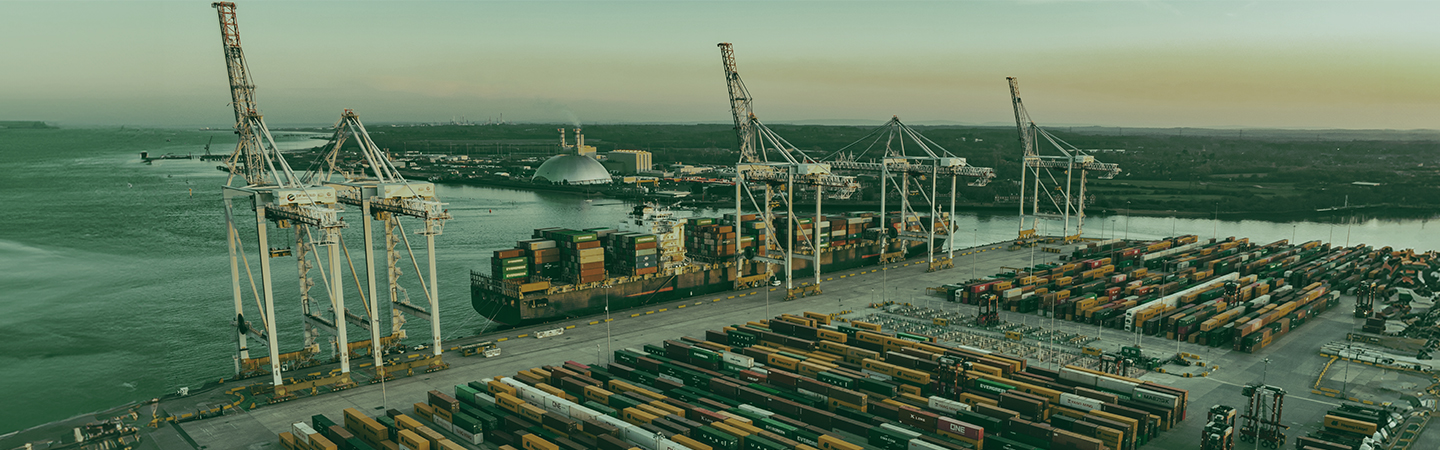
Maritime trade continues to feel the impact of global geopolitical tensions, especially on routes through the Red Sea and Suez Canal. Disruptions influence freight costs, delivery timelines and route optimisation, affecting both GCC and African markets.
At GTR MENA 2026, speakers will explore how companies are adapting their trade logistics and infrastructure strategies, reassessing risk frameworks, and investing in technology to enhance resilience across maritime trade. Enhanced coordination between ports, carriers, and financiers is becoming essential to safeguard the flow of goods.
Driving regional trade growth
Sustainable trade growth depends on diversification and collaboration. GCC–Africa partnerships are now broadening beyond commodities into renewable energy, manufacturing, technology, agriculture, and logistics. These sectors create new possibilities for regional value chains and encourage investment that supports long-term economic development.
For Nedbank CIB, this aligns with our mandate to help clients connect to opportunities across Africa and to shape ecosystems that support inclusive, scalable growth.
Shaping global supply chains
As global supply chain finance continues to transform, GCC–Africa corridors offer new routes for efficiency, resilience, and opportunity. Investments in ports, free trade zones, digital trade platforms, and logistics infrastructure are helping these regions strengthen their positions within global value chains.
Nedbank CIB works with clients to structure financing that supports these transitions, helping them capitalise on emerging trade patterns while managing evolving risk.
The future of GCC–Africa
The future of GCC–Africa relations is set to be defined by deeper investment flows, enhanced regional cooperation, and a shift towards diversified trade. Improved access to finance, greater collaboration among institutions, and more resilient trade logistics will shape how both regions grow in the years ahead.
GTR MENA 2026 is the ideal platform to continue this important dialogue, build stronger cross-border partnerships, and unlock opportunities that advance economic development across both regions.

Zhann Meyer
Head of Agricultural Finance | Nedbank CIB
GCC–Africa flows: The emerging trade power block.
CIB Conferences
Find out more